

2025 marked a turning point for the industries that power the real economy. Progress at the intersection of advanced compute, AI, manufacturing, energy, autonomy, and national security accelerated. Across these arenas, technical breakthroughs stacked up: From AI-native engineering tools and new robotics platforms to step-change advances in hypersonics, energy storage, cell therapy manufacturing, and next-generation compute infrastructure. These were not incremental improvements but capability-level leaps that redefine what is possible in the physical world.
That technical progress translated directly into commercial proof. Eclipse portfolio companies won multi-year industrial contracts, formed strategic partnerships with global leaders, advanced national-scale infrastructure programs, and secured billions in follow-on capital. They delivered milestones such as signing Level-4 autonomous vehicle pilots in complex urban environments, world-first robotic medical procedures, gigawatt-scale energy storage deployments, and record-setting AI performance — all while expanding manufacturing capacity, earning government endorsements, and landing major defense and aerospace awards. These wins reflected a powerful underlying trend: Demand for intelligent, resilient, software-defined physical systems is growing across nearly every sector of the global economy.
This momentum reinforces a larger narrative: The next decade of value creation will be built in the real economy. The combination of AI, robotics, advanced compute, industrial automation, and public-private alignment is reshaping trillion-dollar markets. The stories that follow highlight the extraordinary achievements across the Eclipse ecosystem in 2025.
We spent our first decade building the flywheel to reinvent the world's foundational industries. 2025 made it clear that the time is now to accelerate this movement.

New Investments
2025 was a busy and productive year for the Eclipse Investment Team.
Examples of investments include:
Venture Equity / Early-Stage
Bedrock Robotics
Bedrock Robotics transforms existing construction equipment into fully autonomous machines.

Venture Equity / Early-Stage
Blue Water Autonomy
Blue Water Autonomy is accelerating maritime autonomy across open oceans.

Venture Equity / Early-Stage
EARLY GROWTH
Mind Robotics
Mind will reshape how companies in the physical world build and operate across a wide range of industrial applications. Mind will be a defining step towards the future of AI enabled robotics.

Venture Equity / Early-Stage
Remedy Scientific
Remedy designs, builds, and deploys the scalable remediation systems required to clean up and repurpose the millions of acres of contaminated sites across the globe.

Early-Stage
AheadComputing
AheadComputing is focused on delivering ultra-high performance CPU designs based on RISC-V.

Early-Stage
Genesis AI
Genesis AI is a global physical AI lab and full-stack robotics company on a mission to unlock unlimited physical labor through the development of general-purpose robots.

Early-Stage
Stand Insurance
Stand Insurance protects and insures high-value property based on feature-level risk using physics and AI.
Early-Stage
The Nuclear Company
The Nuclear Company is a fleet-scale nuclear development company using proven technology to construct a series of nuclear power plants across America.

Early Growth
Venture Equity / Early-Stage
ALSO
ALSO, carved out of Rivian by Eclipse, is disrupting the transportation sector by building the most advanced global electric micromobility platform.

Early Growth
Anduril
Anduril is a defense technology company that specializes in advanced autonomous systems.

Early Growth
Cellares
Cellares (existing Eclipse investment) accelerates access to life-saving therapies.

Early Growth
Oxide
Oxide (existing Eclipse investment) is building a new server-side computer for the cloud era, which more closely resembles the kinds of systems run by the world’s largest cloud hyperscalers.

Early Growth
Verkada
Verkada is a pioneer in cloud-based physical security solutions, helping enterprises operate safer, smarter buildings.

Early Growth
Redwood Materials
Redwood Materials provides domestic energy storage at scale, secures U.S. critical materials, and powers the next era of American energy.

Early Growth
True Anomaly
True Anomaly (existing Eclipse investment) is revolutionizing space security.
Portfolio Highlights

Uber taps Wayve to pilot fully driverless rides in the UK
partnerships


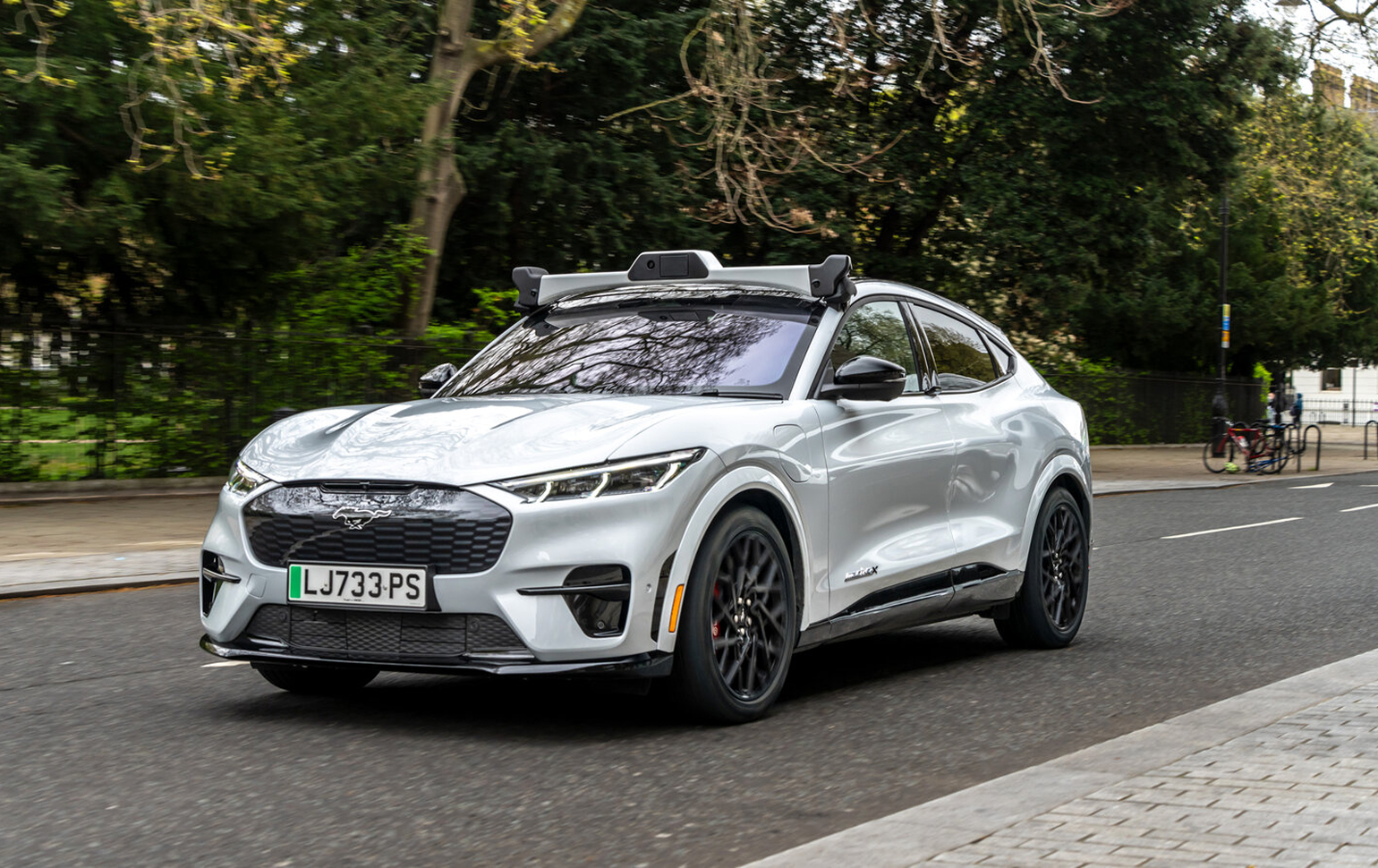
Wayve and Uber announced plans for public-road trials of fully autonomous (Level 4) vehicles in London, which will become Uber’s largest autonomous-vehicle pilot market to date. The program will combine Wayve’s “Embodied AI” AV2.0 technology with Uber’s mobility network to demonstrate an AI driving system capable of operating in any vehicle and any city. Enabled by the UK’s new regulatory framework for commercial self-driving pilots, the companies will work closely with the UK government and Transport for London to secure necessary approvals. London’s dense, complex road environment makes it a challenging testing ground, and successful trials there would mark a major step toward broader deployment of L4 autonomy across diverse global cities.
Ursa Major awarded $32.9M multi-year contract to develop and deliver 16 upgraded Hadley H13 rocket engines to Stratolaunch
partnerships
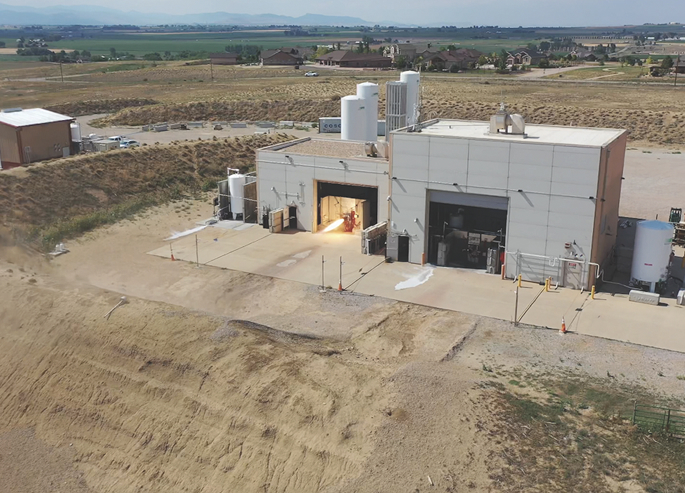
In June, Ursa Major announced it secured a $32.9M contract to deliver 16 upgraded Hadley H13 rocket engines to Stratolaunch for U.S. military hypersonic test programs. The H13 is an enhanced, more reusable version of the Hadley engine, designed to support multiple restarts and lower per-flight costs, enabling more frequent high-speed test missions. These engines will power Stratolaunch’s Talon-A hypersonic vehicle, which has already demonstrated sustained Mach 5+ performance and successful recovery operations. The award is Ursa Major’s largest to date and underscores growing U.S. investment in scalable, cost-effective hypersonic testing infrastructure.
Peak Energy secures landmark 4.75 GWh sodium-ion contract with Jupiter Power
partnerships
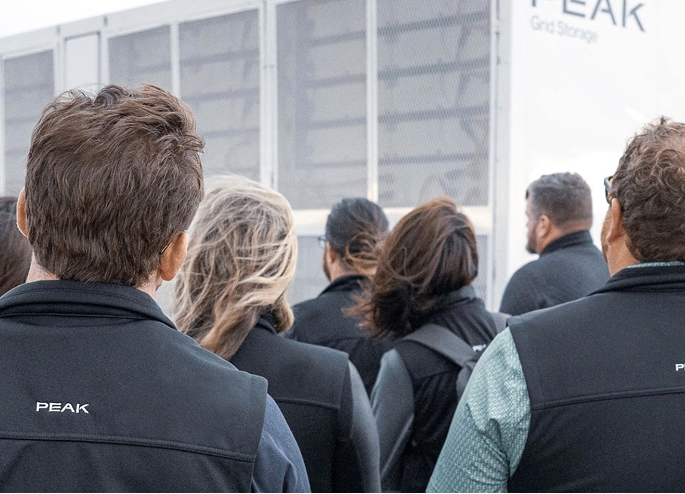
Peak Energy, built by Eclipse, has signed a multi-year contract with Jupiter Power to supply up to 4.75 gigawatt-hours (GWh) of sodium-ion battery storage systems for utility-scale deployment between 2027 and 2030. The first phase calls for delivery of about 720 megawatt-hours (MWh) in 2027 — the largest single sodium-ion battery deployment announced globally to date. The full contract could exceed $500M, reflecting strong commercial confidence in sodium-ion technology as a viable alternative to lithium-ion for grid-scale energy storage. Peak’s sodium-ion systems offer lower degradation, reduced maintenance costs, and improved safety, which could help accelerate adoption of cleaner, more resilient electricity grids.
Arc gets its first major order for electric tugboats worth $160M
partnerships
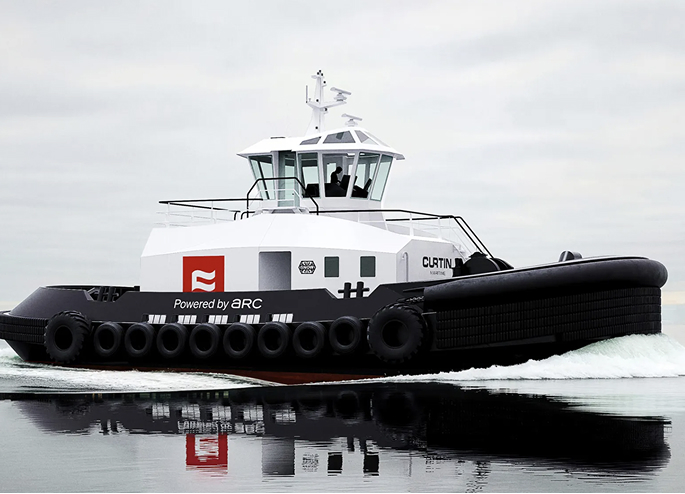
Arc has secured a landmark $160M contract with Curtin Maritime to build eight hybrid-electric ship-assist tugboats — the largest commercial deployment of electric workboats in maritime industry history. Each tug will deliver over 4,000 horsepower, powered by a 6 MWh battery buffer, and is being built in collaboration with the shipyard Snow & Co. The first four vessels are slated for delivery by the end of 2027, and the fleet is intended to operate in major ports, such as the Ports of Los Angeles and Long Beach. By replacing traditional diesel tugs — which are heavy polluters — with electric powertrains, the deal signals a major shift toward cleaner, more efficient and lower-maintenance maritime operations.
Cellares, Mitsui Fudosan open cell therapy Smart Factory in Japan
partnerships

Cellares, in collaboration with Mitsui Fudosan, is building Japan’s first commercial-scale “Smart Factory” for manufacturing cell therapies, located in Kashiwa City, just northeast of Tokyo. The facility — scheduled to begin operations around 2027 — will use Cellares’ automated platforms Cell Shuttle™ and Cell Q™ to produce advanced treatments such as CAR-T therapies, aiming to cut manufacturing costs by up to 50% and eliminate many of the bottlenecks tied to manual production. With room for about 350 employees, the factory is expected to simplify cold-chain logistics, accelerate delivery times, and significantly expand patient access to cell therapies across Japan and neighboring regions. The new facility marks a critical step in Cellares’ global strategy to enable fast, scalable, and cost-effective cell therapy manufacturing worldwide.
Mayo Clinic partners with Microsoft Research and Cerebras to revolutionize AI in healthcare
partnerships
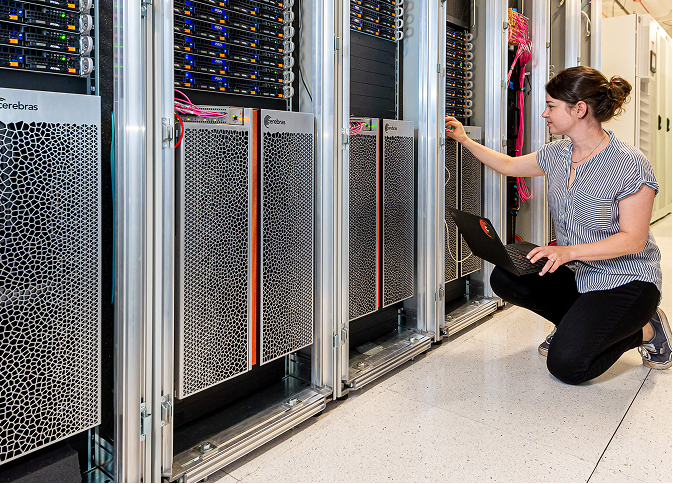
Earlier this year, Mayo Clinic announced partnerships with Microsoft Research and Cerebras Systems to accelerate the use of generative AI in radiology and genomics. Its collaboration with Cerebras focuses on building a genomic foundation model using population-level and Mayo patient data to better predict individual treatment responses. Together, these initiatives aim to advance personalized, data-driven medicine by improving diagnostic speed, accuracy, and therapeutic decision-making.
Reliable Robotics CEO and Co-Founder Robert Rose Testifies Before Congress on U.S. Aviation Leadership through Autonomous Aviation
Milestones

Reliable Robotics CEO and co-founder Robert Rose testified before the U.S. House Committee on Transportation & Infrastructure’s Subcommittee on Aviation during the “America Builds: The State of the Advanced Air Mobility (AAM) Industry” hearing, stressing the importance of autonomous aviation for maintaining U.S. leadership and safety in the National Airspace System. He highlighted the company’s progress toward FAA certification of its Reliable Autonomy System (RAS) and safety-enhancing Detect and Avoid (DAA) technologies, as well as its contract with the U.S. Air Force to deploy an autonomous Cessna 208B Caravan for contested logistics missions. Rose urged continued bipartisan support and regulatory focus — including modernization of air traffic control and forward-looking policies — to integrate these advanced systems and expand air service to more communities while bolstering national security.
Capstan Medical completes robotic catheter mitral valve replacement
Milestones
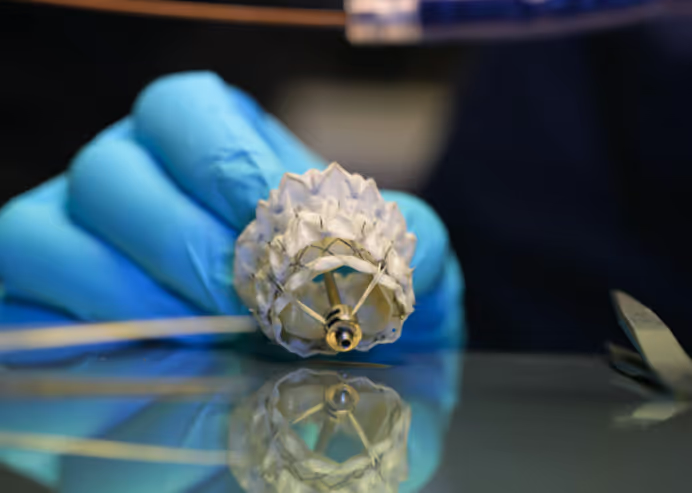
Capstan Medical successfully completed the world’s first robot-assisted transcatheter mitral valve replacements in humans, deploying a novel mitral valve via a minimally invasive robotic catheter system in two patients. The procedures — performed at Hospital Clínico Universidad Católica in Santiago, Chile — eliminated mitral regurgitation in both patients, who were discharged home within days with improved heart function. According to the surgeons, the robotic platform supplied unprecedented catheter stability and control, enabling precise valve positioning even in complex anatomy that often excludes many patients from existing valve-replacement options. With this milestone, Capstan aims to expand structural-heart interventions to a broader range of patients, advancing toward pivotal trials and regulatory approval in the coming years.
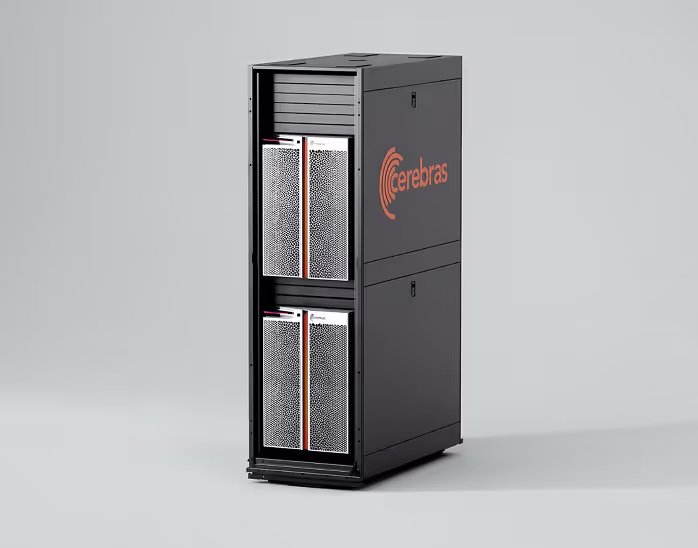
Cerebras delivers blazing speed for OpenAI’s new open-model with 3,000 tokens per second
Milestones
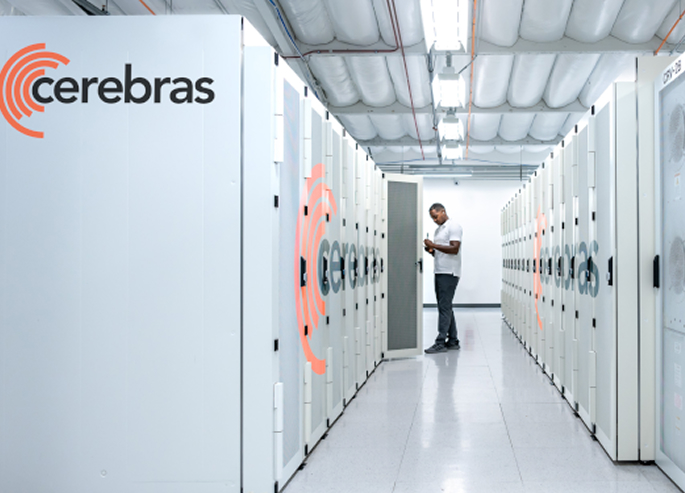
In August, Cerebras Systems announced that its AI infrastructure can now run gpt-oss-120B — OpenAI’s newly released open-weight reasoning model — at a record-breaking speed of about 3,000 tokens per second. This huge speed improvement eliminates common GPU bottlenecks and enables fully-featured, high-intelligence AI inference with ultra-low latency. Because of the speed and cost efficiency, organizations can now use gpt-oss-120B for demanding use cases — from live coding assistants and document summarization to large-scale agentic reasoning — at a fraction of the cost and delay compared to traditional systems. In short: Cerebras’ deployment of gpt-oss-120B marks a major milestone for open-weight generative AI, offering performance, flexibility, and affordability previously available only with proprietary models.
Rivian spinoff company Also unveils first e-bike and quad vehicles
Milestones
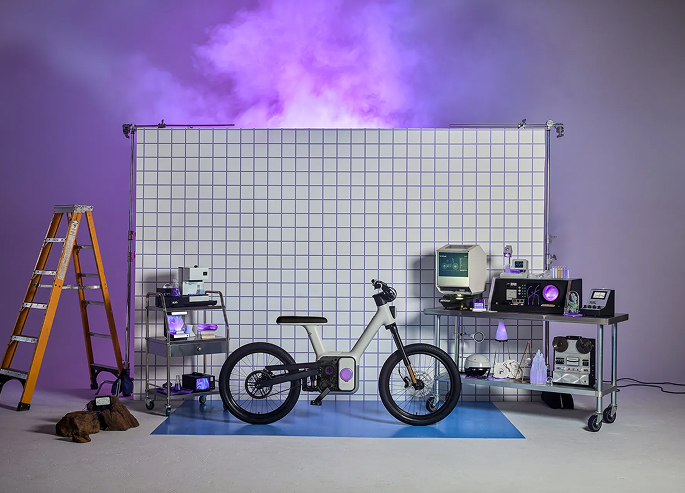
Also, the spinoff from Rivian backed by Eclipse, unveiled the Also TM-B — a highly modular, car-like electric bike with a “pedal-by-wire” drivetrain, removable battery, and modular frame that lets riders switch between commuter, cargo, or bench-seat configurations with ease. It offers up to 28 mph pedal-assist (Class 3), a range up to 100 miles on the largest battery pack, and smart features including a 5-inch touchscreen “Portal” console, regenerative braking with ABS, and app-enabled security/anti-theft. Preorders have opened with deliveries slated to begin in 2026. The TM-B’s emphasis on flexibility, repairability through Rivian’s support network, and vehicle-grade components mark it as one of the most ambitious, yet affordable, e-bikes on the market.
Nucleus RadioPharma names former FDA Commissioner as CEO
Milestones

This summer, Nucleus RadioPharma — a contract-development and manufacturing organization (CDMO) specializing in radiopharmaceuticals and built by Eclipse and the Mayo Clinic — named Stephen M. Hahn, former head of U.S. Food and Drug Administration (FDA), as its new CEO. Hahn, who also previously served as chief medical executive at MD Anderson Cancer Center and later led biotech firms, brings a rare mix of regulatory, clinical, and operational expertise to the role. Under his leadership, Nucleus is prioritizing key challenges in the radiopharmaceutical industry — including expanding the supply of critical medical isotopes, building more GMP-compliant production facilities, and scaling infrastructure to handle radioactive therapies safely. The move signals Nucleus’s ambition to accelerate patient access to targeted, precision oncology drugs worldwide by expanding capacity, streamlining supply chains, and enhancing manufacturing capabilities.
Bedrock Robotics excavators remove 65,000 tons of dirt on southwest project
Milestones

Bedrock Robotics, built by Eclipse, deployed its autonomous-excavation technology for what’s now being described as the construction industry’s largest supervised-autonomy mass-earth moving project to date. On a 130-acre manufacturing site in the Southwest U.S. — in partnership with Sundt Construction — its autonomous excavators moved over 65,000 cubic yards of soil and rock, loading human-operated dump trucks using the same workflow previously used by manual crews. The system works across excavators ranging from 20-ton to 80-ton machines, making it scalable and flexible enough for both compact and heavy-duty earthmoving tasks. By handling repetitive, labor-intensive tasks, Bedrock’s technology relieves human operators from monotonous work — freeing skilled staff to focus on more complex tasks — a major advantage in an industry facing growing worker shortages.
A U.S. company making long-range drone warships for a China fight just put its tech to the test in the water
Milestones
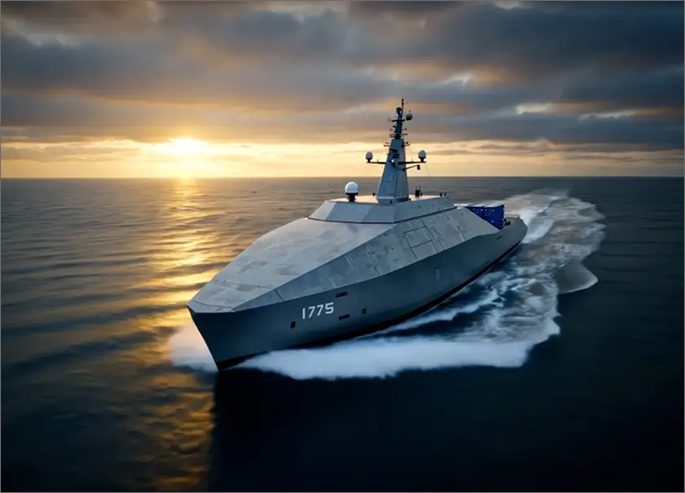
Blue Water Autonomy, built by Eclipse, completed its first full-scale ocean tests of long-range autonomous warships, a key step toward fielding 150-foot drone vessels by 2026. The company’s uncrewed ships are intended to support the U.S. Navy in a potential conflict with China by operating across the vast Pacific, carrying combat payloads like missiles and radar while avoiding the resource burden of traditional crewed warships. These drone ships promise long endurance — enough to sail more than 6,000 miles — and are being positioned as a faster, less expensive way to expand fleet coverage and survivability without risking sailors’ lives. If widely deployed, they could significantly shift naval strategy by enabling distributed, autonomous maritime operations in contested waters.
Tenstorrent launches BlackholeTM developer products at Tenstorrent DevDay
Milestones
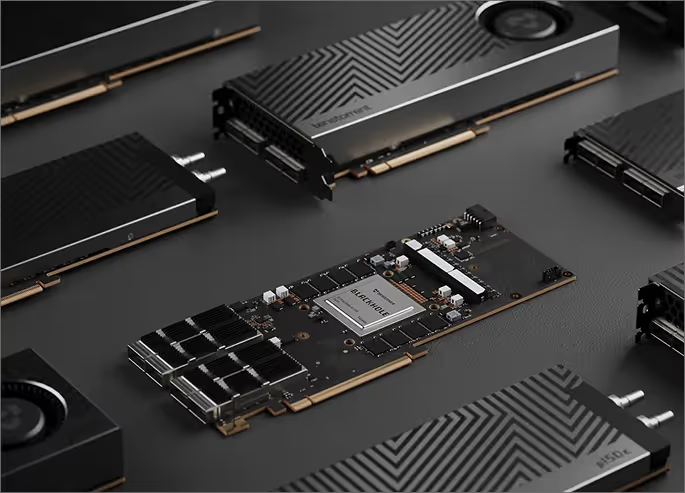
Tenstorrent has introduced its new Blackhole line of hardware and software products for developers, unveiled at Tenstorrent Dev Day, aimed at accelerating AI model training and inference. The Blackhole family includes purpose-built silicon and a complete toolchain designed to deliver high performance and flexibility for large-scale AI workloads. The launch reflects Tenstorrent’s strategy to provide alternatives to traditional GPU-centric AI infrastructure, with an emphasis on open standards and broad software compatibility. By targeting developer needs directly, the company hopes to expand its ecosystem and support more efficient and scalable AI development.
Oxide raises $100M Series B to scale cloud infrastructure for on-premises computing
Fundraising
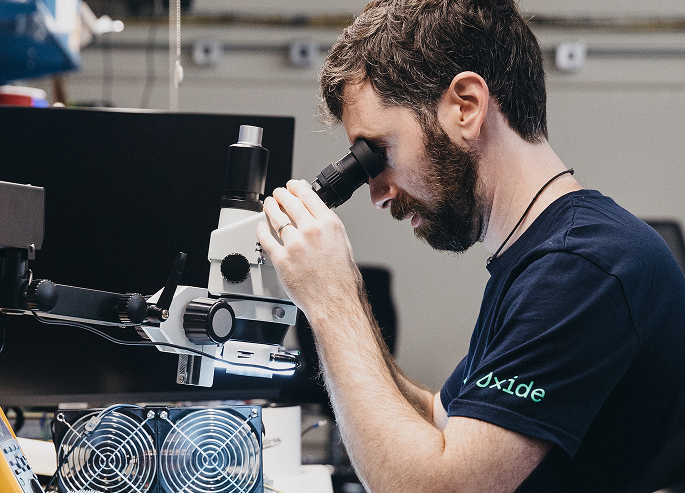
Oxide Computer Company announced its $100 million Series B to accelerate production and expand its offerings. Founded in 2019, Oxide builds integrated server racks — including its “Oxide Cloud Computer” — bundled with proprietary software that allows enterprises to run cloud-like infrastructure on-premises without relying on public cloud providers. The new capital will enable Oxide to scale manufacturing, improve logistics, and meet growing demand from customers ordering dozens or even hundreds of systems at once. Oxide is a full-stack alternative to cloud hyperscalers, offering security, control, and performance for organizations that prefer to own their infrastructure while still getting the flexibility of cloud-style operations.
ForSight raises its $125M Series B
Fundraising
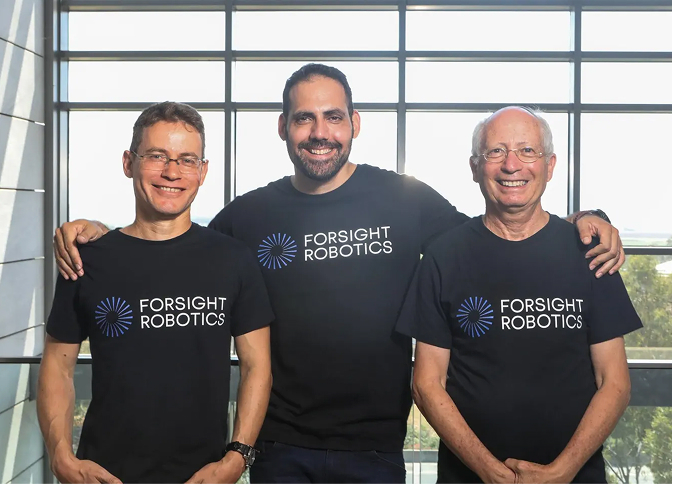
ForSight Robotics raised $125M in Series B funding to advance its ORYOM robotic platform, the world’s first dedicated system for eye surgeries such as cataract operations. The ORYOM platform uses AI, computer vision, and fine microsurgical robotics to perform highly precise procedures, aiming to improve consistency, reduce surgeon fatigue, and extend access to care globally. This past year, more than two dozen ophthalmic surgeons have already carried out hundreds of procedures on animal eye models using ORYOM, and ForSight plans to begin its first human clinical trials this year. By automating cataract and other eye surgeries, ForSight hopes to help address a looming global shortage of ophthalmologists and dramatically expand access to eye care for millions worldwide.
Voxel raises its $44M Series B
Fundraising

Voxel, a startup that uses AI and computer vision to improve workplace safety, announced its $44M Series B. The fresh capital will be used to deepen Voxel’s AI capabilities, accelerate R&D, and expand its team. Voxel’s platform integrates with existing security cameras at warehouses, factories, ports, and other industrial environments to detect hazards and unsafe behaviors in real time, helping companies shift from reactive safety measures to proactive prevention. Early users — including several large companies in logistics, manufacturing, and retail — achieved significant reductions in recorded injuries and high-risk behaviors within months of deployment.
True Anomaly raises $260M Series C
Fundraising

True Anomaly announced its $260M Series C to expand its operations, deepen vertical integration, and ramp up development of its spacecraft and software platforms. The company is building autonomous systems designed for national security missions and aims to deliver space-defense capabilities quickly and scale up its infrastructure to meet growing demand.
AI chip company Cerebras raises $1 billion in pre-IPO funding round
Fundraising
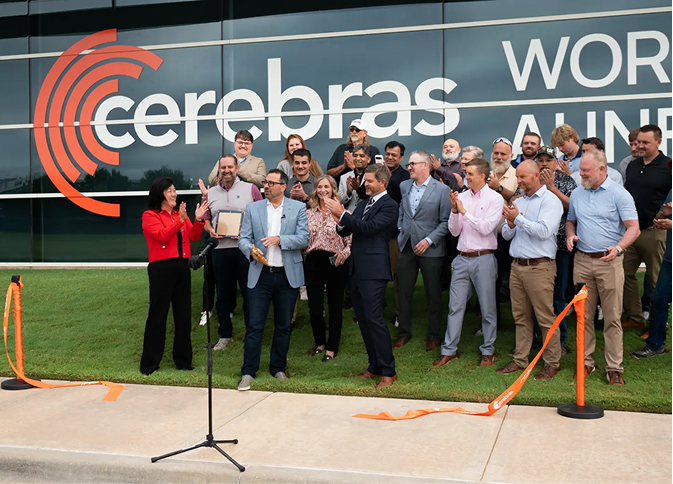
Cerebras Systems raised $1.1 billion in a pre-IPO funding round led by Fidelity, bringing its valuation to roughly $8.1 billion. The capital will be used to expand its U.S. manufacturing and data-center footprint, as well as further develop its AI hardware and systems.
Foxglove raises $40M to scale its data platform for roboticists
Fundraising
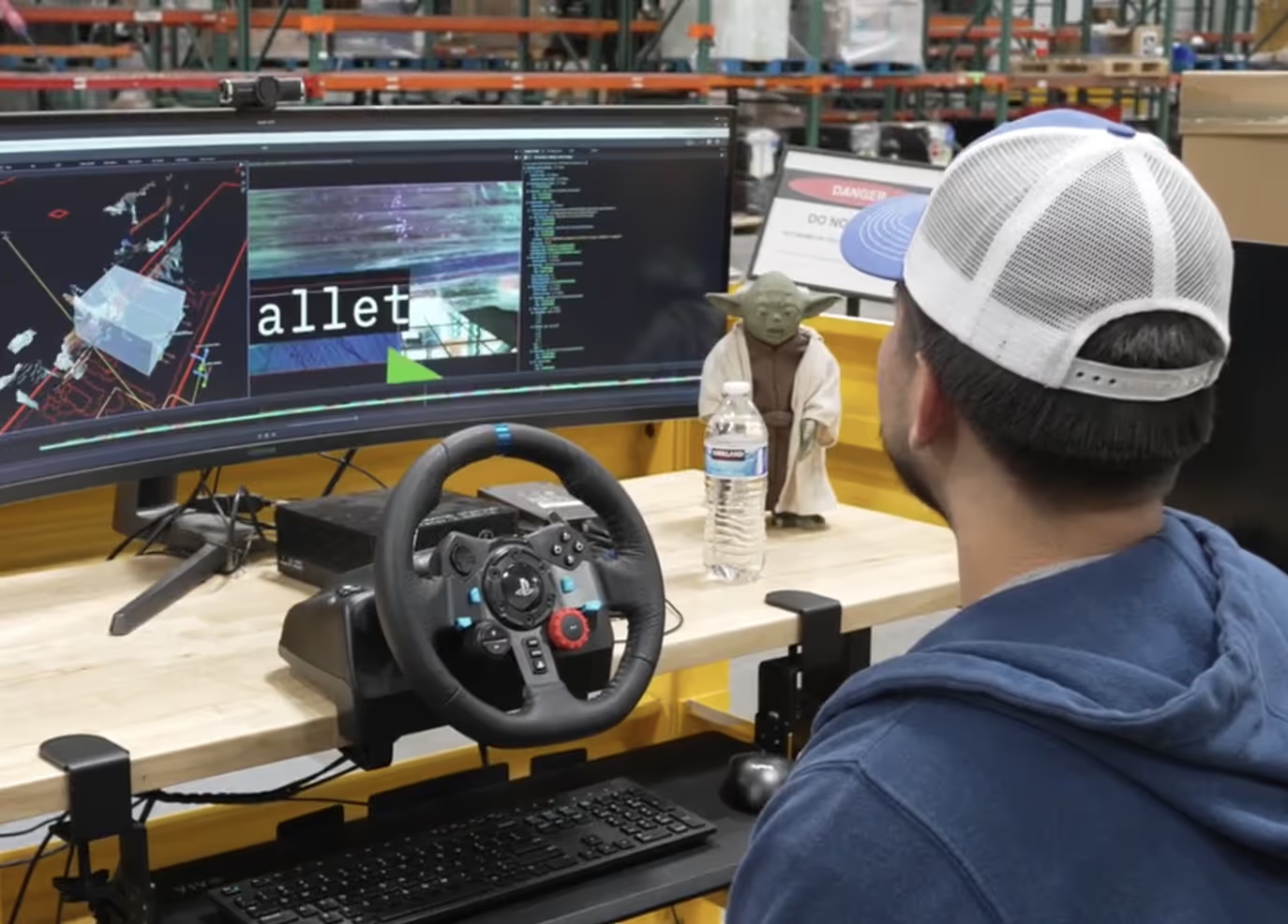
Foxglove raised a $40M Series B funding round to expand its platform, which helps robotics companies collect, store, visualize, and analyze massive, multimodal sensor datasets (video, 3D, telemetry, etc.), making it easier to develop and deploy robots across industries like manufacturing, logistics, autonomous vehicles, and defense. Customers already using Foxglove include major players such as NVIDIA, Amazon, Anduril, Dexterity, and others — integrating the platform to replace costly in-house tools and speed up development workflows. With this new funding, Foxglove plans to deepen its capabilities across the full robotics data lifecycle (from prototyping through large-scale deployment) and scale its engineering team, positioning itself as a foundational infrastructure provider for the next generation of autonomous systems.
Aerospace startup Ursa Major valued at $600 million with new funding
Fundraising
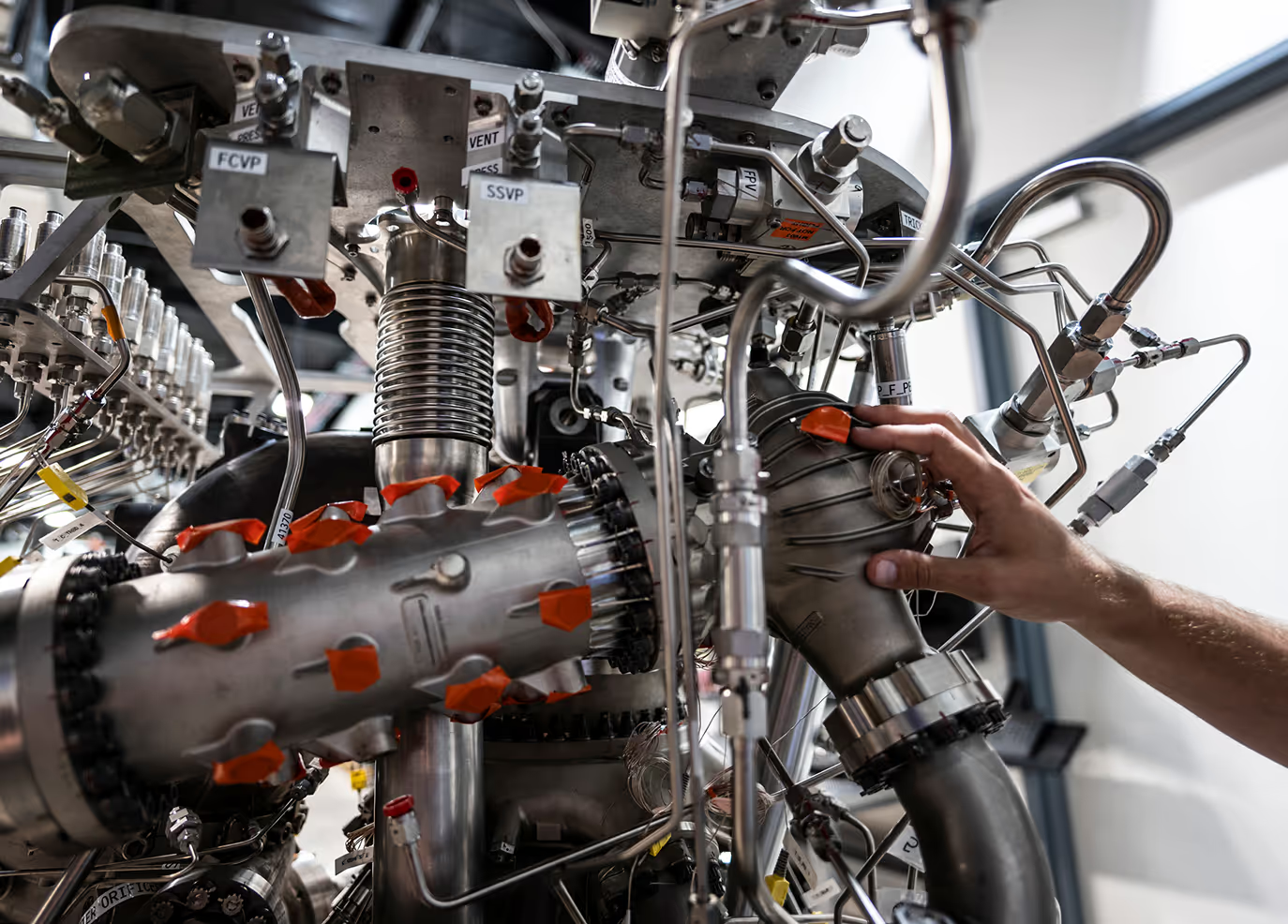
Ursa Major announced its $100M Series E funding round. The company, which builds propulsion systems for hypersonics, solid-rocket motors, and space launch vehicles, says the new funds will help scale manufacturing across its product lines and meet growing demand. In the first three quarters of 2025, Ursa Major booked over $115M in orders, signaling strong commercial momentum. Backed by a growing roster of U.S. defense and space-industry partners, the company is playing a major role in next-generation rocket propulsion and hypersonic systems.
In 2025, we added four new members to the Eclipse team to continue offering best-in-class support to our portfolio companies.
Joe Fath

Partner and Head of Growth

Before joining Eclipse, Joe spent more than two decades at T. Rowe Price, where he led the firm’s oldest and one of its largest investment strategies — the $100B+ Growth Stock Fund. Over 23 years as a growth investor, he partnered with companies that defined major technology and economic transitions, from the post-dot-com internet boom to the rise of cloud, mobile, AI, and the convergence of hardware and software in physical industries. Joe has deep experience recognizing when innovation reaches an inflection point and when the key enablers for building high-margin businesses in massive markets come together. Having helped scale companies such as Tesla, Amazon, Rivian, Meta, and Google, he is uniquely positioned to guide Eclipse portfolio companies as they grow from successful private ventures into durable public enterprises.

Thomas Storch
Partner and Head of Policy

Thomas has held senior roles at both the White House and the U.S. Department of Energy, including Deputy Assistant to the President for International Economics and Deputy Director of the National Economic Council. In these positions, he shaped economic and national security policy across international trade, energy, and U.S. competitiveness. As Eclipse enters its next decade of rebuilding the world’s most foundational industries amid rapid geopolitical and technological change, public-sector collaboration has become increasingly essential. Thomas serves as a critical bridge between Eclipse portfolio companies and government stakeholders, helping strengthen the nation’s physical industries and accelerate deployment at scale.

Michael Laser
Venture Partner

Michael Laser is a Venture Partner at Eclipse, where he leverages his experience as both an operator and investor to support teams from formation through scale. Prior to Eclipse, he co-founded and built Second Avenue, a single-family rental real estate investment and technology platform that grew to 200 employees and deployed over $1B in capital. Earlier in his career, Michael worked at Coatue Management, investing across both venture and public markets. Over the past decade, he has continued to invest in and advise companies at multiple stages, partnering closely with founders and leadership teams on capital strategy, growth, and scalable execution.

Nathan Gorbach
Senior Finance Associate

Nathan is a Senior Finance Associate at Eclipse, where he supports the firm’s financial and operational functions.

Portfolio





Eclipse